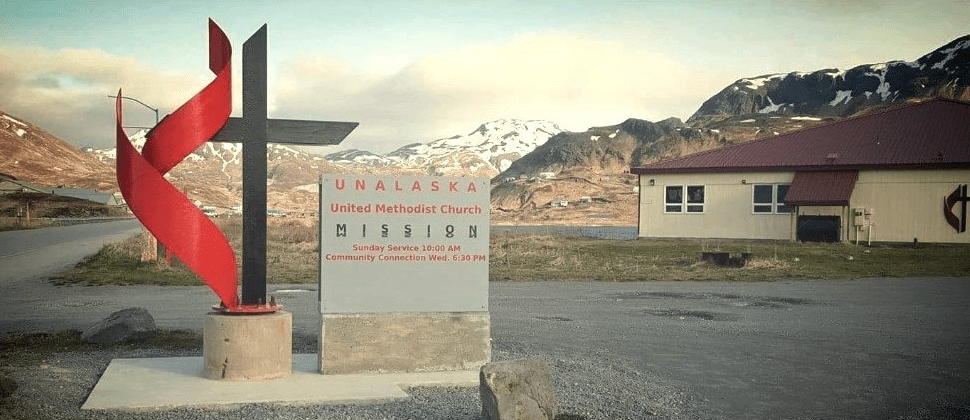
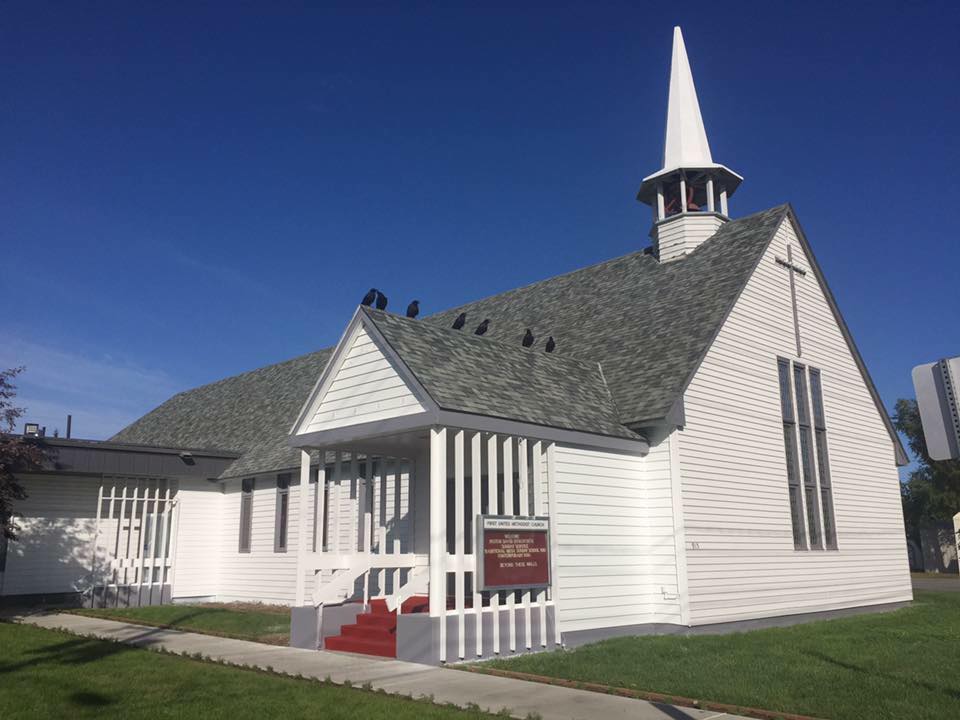
The front of Unalaska UMC. This church serves as a vital lifeline to the community over 800 miles away from the mainland.
Submitted by Pastor Matt Reinders, Unalaska United Methodist Church
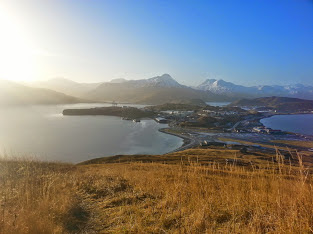
Unalaska
Fishing boats have holds. After they pull nets or long lines or pots from the Bering Sea onto the deck and sort the catch, the abundant resources of the sea fall through a hatch into the hold. The front doors of the Unalaska United Methodist Church are like a hatch to a hold. Nearly everyday, as people transition off the island, household goods, clothes, beds and cribs, appliances and furniture make their way to the arctic entry of the church. Volunteers sort and organize the materials and store them in sections of the church like reuse/recycle holds.
People transition onto the island nearly everyday, too. Oftentimes they move with only the most essential of items, such as a week’s worth of clothes, lawn furniture, a pot and a pan, and sleeping bags. I know because that is what my family and I did! The good news is that Unalaska United Methodist Church has holds full of stuff to help set up a home.
Most Alaskans are comfortable living in The Last Frontier. Less may be comfortable in remote communities. Travel delays, isolation, phone and internet services frequently disrupted, all push people to the limits of coping at some point.
The front doors of Unalaska UMC serve the community as a holding place for items and resources for households in the community.
Some Unalaskans have begun to describe the community as “resource insecure” to help communicate the ebb and flow between resource abundance and bust. Logistics count for a lot, and mistakes or accidents can cost a high price. Unalaska is an 800 plus mile flight to the nearest hospital, discount wholesale store, or fast food restaurant. Many folks get off the island only once each year. Communities of faith like the Unalaska United Methodist Church can make all the difference to someone who feels isolated, misunderstood or misplaced. It is a community that fully understands and stays prepared to assist in anyway we can.
Unalaska is a generous community where God works through us to engage in service with others. Through this service, God’s grace and peace become the living word for a stressed out world. We keep our holds ready for all kinds of people with many kinds of needs. In the meantime, our hatches are open.
Submitted by Pastor Janice Carlton, First UMC of Ketchikan
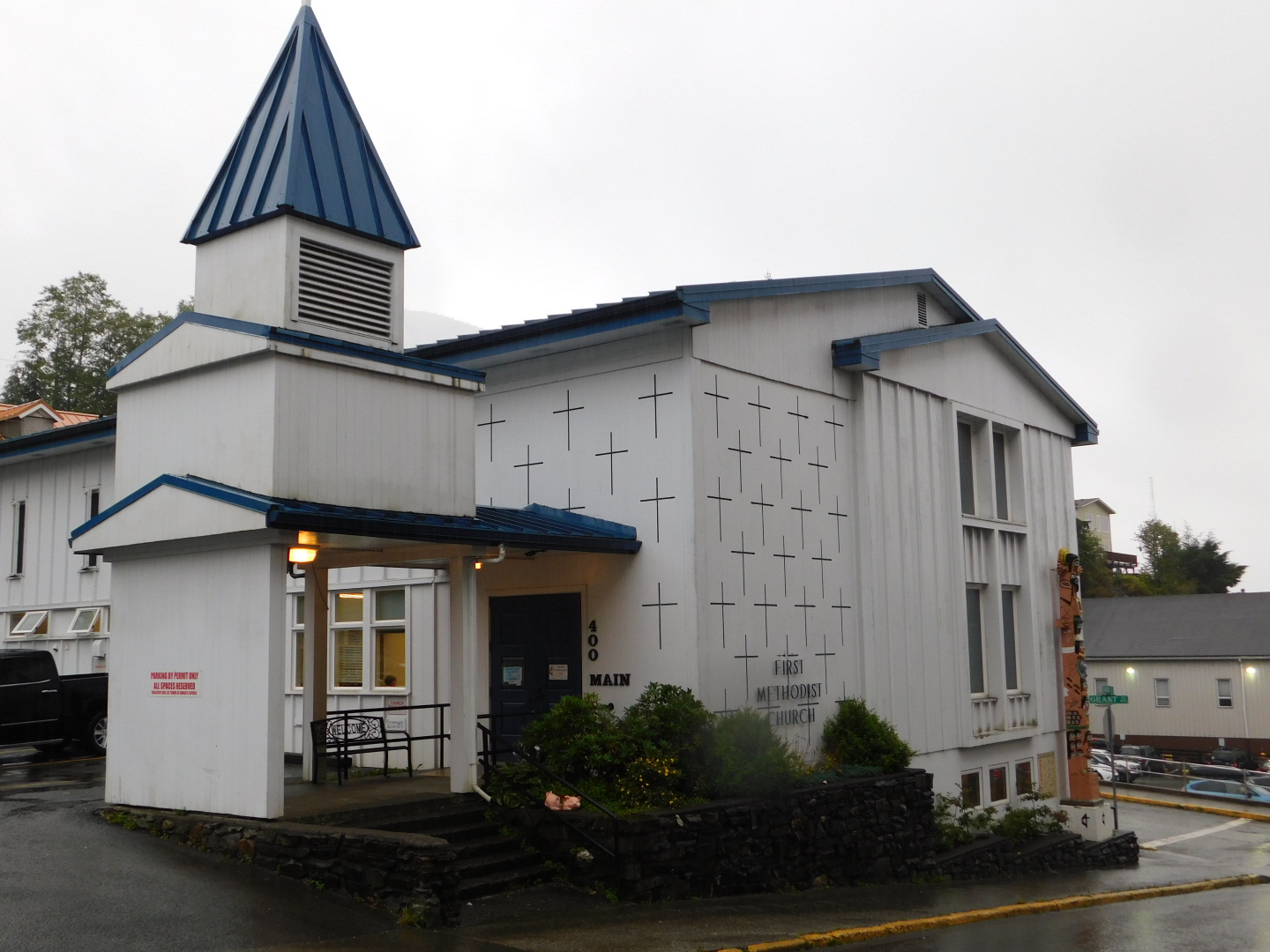
The First United Methodist Church of Ketchikan, Alaska is located on Revillagigedo Island in a rainforest with a population of a little over 8,000. There has been a Methodist presence since 1901 when the town was a small mining and fishing village. It has the distinction of being the first completed church building in the first incorporated town in Alaska. Ketchikan is a town of two seasons. Even though there is only one main road 34 miles long, the differences between these seasons are extreme in population and activities. Between May and October the population walking its streets in a day can more than double its year round daily population. A tourist disembarking from one of the many cruise ships could easily encounter the missions of the church.
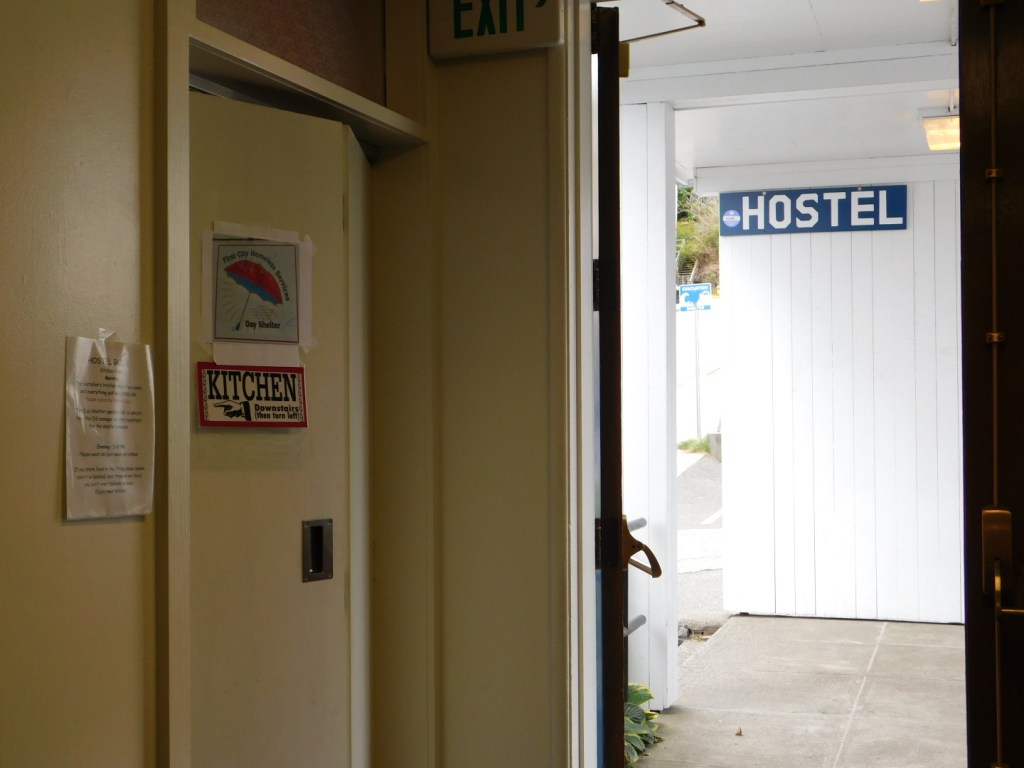
Since the church is located in the historic downtown section it is affected by both on and off-season activities. Three months of the year it hosts people from all over the world in its hostel. The hostel was begun in the 1960s to provide an affordable place to stay while touring the town. It is currently located in the second floor of the church. For $20 a night visitors arriving by plane and ferry can have a safe, clean place to sleep. The guests also have access to a full kitchen and showers. This year the hostel has also been home to several local people. While working seasonal jobs they have affordable housing and amenities. The hostel is staffed by volunteers assigned by the General Board of Global Ministries (GBGM). These volunteers are “faces” for the hostel and their willingness to serve and witness are gifts to all the lives they touch. During the remainder of the year the hostel beds are used by visiting middle and high school students. Traveling teams or groups can stay in the church when competing against or performing with the local school teams and music groups.
Looking out the front door to the Hostel
The hostel is not the only “safe sanctuary” offered by this church. First City Homeless Shelter and, more recently, the fall and winter Ketchikan Warming Center are located in the basement/fellowship hall of the church. The planning for this shelter began in 1987 during the appointment of Reverend Bob Bowers and came to fruition during the appointments of Evelyn and Teri Erberly. Year-round from 8 AM to 4 PM the basement is open to the homeless and anyone needing a warm, dry place to “hang out.” A light breakfast is available with hot coffee throughout the day and showers and clean clothes are available. Guests utilizing this facility may also receive tutoring on computer skills and job searching.
In the fall and winter the homeless shelter hours extend to include the Ketchikan Warming Center. In addition to the day shelter, a Warming Shelter is open from 8 PM to 6 AM. During these hours, once again, a warm, dry place is available including an evening meal.
One of the first things a tourist will notice as they wander uphill on Grant Street from the docks is the Easter totem attached to the corner of the church. Ketchikan is a town with many totems. This storytelling tradition was used by indigenous peoples to preserve history and stories big and small.
Totem and First City Homeless door.
Reverend David Fison (appointed to Ketchikan from 1961-1966) embraced this tradition and carved two Christian totems. One explained the Christmas story and the other Easter. In true missionary tradition he spread the “Good News” by incorporating “language” familiar to his listeners.
These two seasons could be named the Tourist Season and the Season of Daily Living in a Small Community.
The First United Methodist Church is a church for both.. The question is often asked, “If the doors of your church were closed would the community notice?” The answer to that question for this church is YES.
Community is a corner stone for this UMC church. It has a passion for locally-based community mission. The church participates in community worship opportunities such as the Sunrise Service and Blessing of the Fleet. It follows Jesus’ request to “Feed my Sheep” by providing meals for 40 to 70 men, women, and children in the communities’ Soup Kitchen and Lord’s Table. The joy of small town living is celebrated in the church parking lot during the “Blueberry Festival” (this year was the 44th). During this festival the church has a food stand which includes selling blueberry pies with several “secret ingredients.” The First United Methodist Church is also a partner with “Love in Action.” Through this organization people are shown the love of Christ receiving help with food and utilities during the rough seasons of their life. For the last year this church and Ketchikan Presbyterian church have shared a pastor and several worship opportunities including a choir.
The First United Methodist Church hears and lives John 21:16-17.
“When they had finished eating, Jesus said to Simon Peter son of John, do you love me more than these?” “Yes, LORD,” he said, “you know that I love you.” Jesus said, “Feed my lambs.” Again Jesus said, “Simon son of John, do you love me?” He answered, “Yes, LORD, you know that I love you.” Jesus said, “Take care of my sheep.” The third time he said to him, “Simon son of John, do you love me?” Peter was hurt because Jesus asked him the third time, “Do you love me?” He said, “LORD, you know all things; you know that I love you.” Jesus said, “Feed my sheep.
Thank you to Evelyn Valentine (her written history of the church was essential), Roland and Alaire Stanton, and Kathy Early for their help.
Submitted by Pastor Erin Day, Palmer United Methodist Fellowship
The “front” door to Palmer United Methodist Fellowship in Palmer, Alaska.
Basements are a way of life in Southcentral Alaska: many houses here are built with a foundation well below the ground, as a means of adding square footage and a little extra stability for the earthquakes we experience on a regular basis. Basements are functional and flexible: they can be places for storage, for entertainment, for extra living space, or for ordinary activities like doing the laundry.
Most Alaskans don’t expect a church to meet in a basement, but that’s just where Palmer United Methodist Fellowship makes its home. And like every other basement, “functional and flexible” are the perfect adjectives to describe our small-and-mighty community.
Sixteen years have passed since our fellowship first began to gather together in the Matanuska Valley, in the shadow of craggy mountains and ringed by farmland. The face of the small city of Palmer has changed during this time: a growing population and economic shifts have also meant a rise in homelessness, increased need for social services, and more vulnerable children and families in our midst. This reality has demanded a faithful response. As a small congregation we knew we couldn’t do *everything*, but we were certain we could do *something*.
Over this past year, our small-and-mighty church took a good look at our community and ourselves, and asked, “What does our heart burn for? What is God calling us to do beyond our basement? Who is God asking us to love?”
A period of discernment and deep listening taught us that we want to see our community fully nourished in body and spirit, and that we want to make this vision a reality by loving God and neighbor through practical care and inclusive community. How are we doing this, you ask? By embracing our “functional and flexible” basement ethos, of course!
We discovered that there were homeless and in-transition students at two local elementary schools who relied heavily on the breakfasts and lunches provided by their school during the week, yet had no guarantee of food to eat on the weekend… so this spring we packed over 100 bags of non-perishable groceries for our homeless and in-transition elementary-aged neighbors to take with them on Friday afternoons, ensuring that they (and perhaps a sibling or two) had something to eat over the weekend.
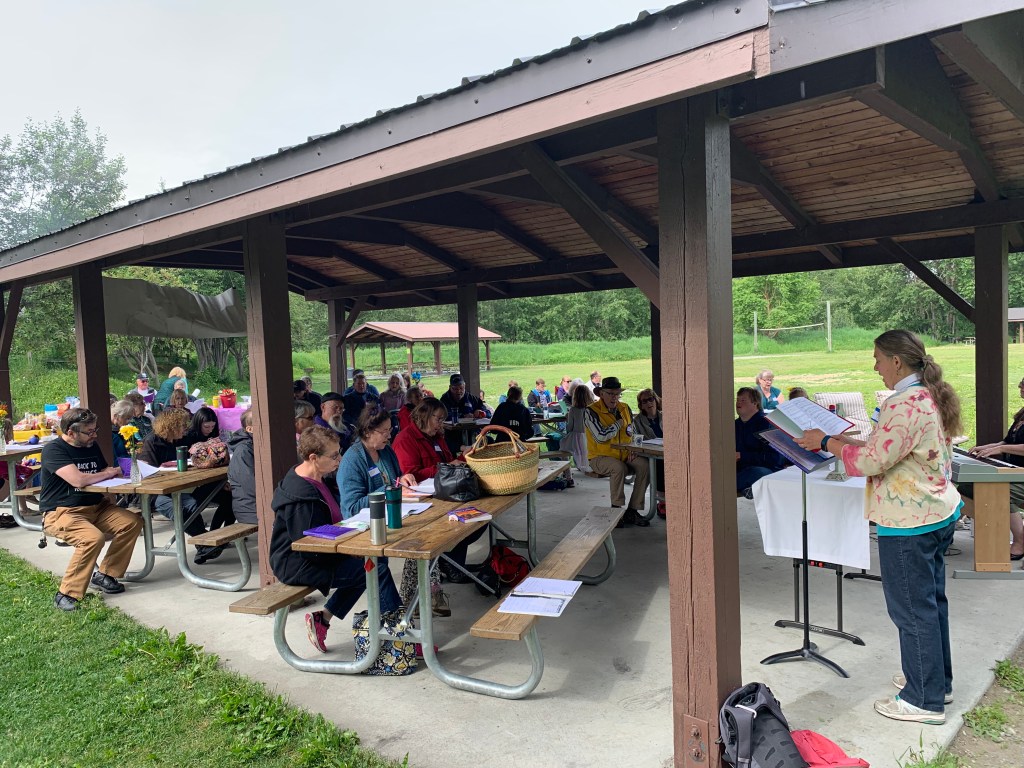
Ecumenical worship in the park.
Packing grocery bags
Art + Worship during Advent
As school begins again this fall we will continue this important work, with the added potential of providing material support to a local bilingual school that currently does not have a school lunch program in place. A few perceptive parents noticed that some students consistently brought very little or nothing to eat for lunch, and decided that something had to be done! We are excited about the potential to partner with our neighbors to ensure that little bodies and hearts are nourished well.
We’ve also discovered that homeless families no longer have a place to wash their laundry, since the local laundromat foreclosed in March. What does a functional and flexible community do? We find resources and partnership! The building that houses our worship space just happens to include a local hair salon, whose generous owner has agreed to allow his salon laundry facilities to be open for use by homeless families. Our church now has the opportunity to open our doors to our neighbors in a brand new way, making our basement a space where community can be built as the laundry gets washed.
Palmer is a place where creativity thrives, and we are excited to see how God leads us to creatively respond to the evolving needs of our neighbors. If the past year is any indication, there is more practical care to offer, more inclusive community to build, more partnership to cultivate, and more love to sow into fertile ground. We will continue to be a functional and flexible cadre of Jesus-followers, living beyond our basement and into the abundant life that Jesus offers.
The missionary work of the superintendent and members of the
Visitation-Evangelism team of the Alaska Missionary Conference over 67 years
ago birthed the current incarnation of a United Methodist Church in Fairbanks,
known as First United Methodist today.
The first worship service was held at Carpenter’s Hall on
March 23, 1952. Reverend A. E. Purviance arrived shortly thereafter, in June of
1952. The first hymnals, Sunday School supplies, church envelopes, communion
set and altar-ware were supplied through the generosity of churches in
Ketchikan, Seward, Anchorage and Juneau. In September 1952, First Methodist
Church, known as “America’s Northernmost Methodist Church”, was officially
organized with 80 members, and just two years later reported a total of 320
members.
Being born of missions, First UMC of Fairbanks has never
wandered far from its roots as a base of missions. From the early years to
today, it has provided a family away from family and a home away from home for
the many military families that find duty calling them to Alaska’s Interior.
Records indicate that as far back as 1959, the Women’s Society of Christian
Service at First Methodist was working with the USO in welcoming service
members.
In 1964, the Fairbanks church responded generously to those places
and people in Alaska that were reeling from the devastating Good Friday
earthquake.
In 1967, First Methodist again found itself the recipient of
conference support after a flood devastated the city and the church building.
Over 25 laypersons and pastors from Anchorage, Nome and Chugiak journeyed to
the “Northernmost Church” to help clean up and rebuild.
Just 10 years later, FUMC helped to birth a new
congregation, underwriting the first year’s budget of a new church in North
Pole, the New Hope United Methodist Church.
In addition, the education wing at FUMC, built in 1959,
started providing more than Sunday School lessons when the classrooms became living
space for various mission groups and scouting groups visiting Alaska’s Interior.
To this day, the classrooms double as housing for United Methodist Volunteers
in Mission (UMVIM) during the summer, and as a safe space for homeless families
during the school year.
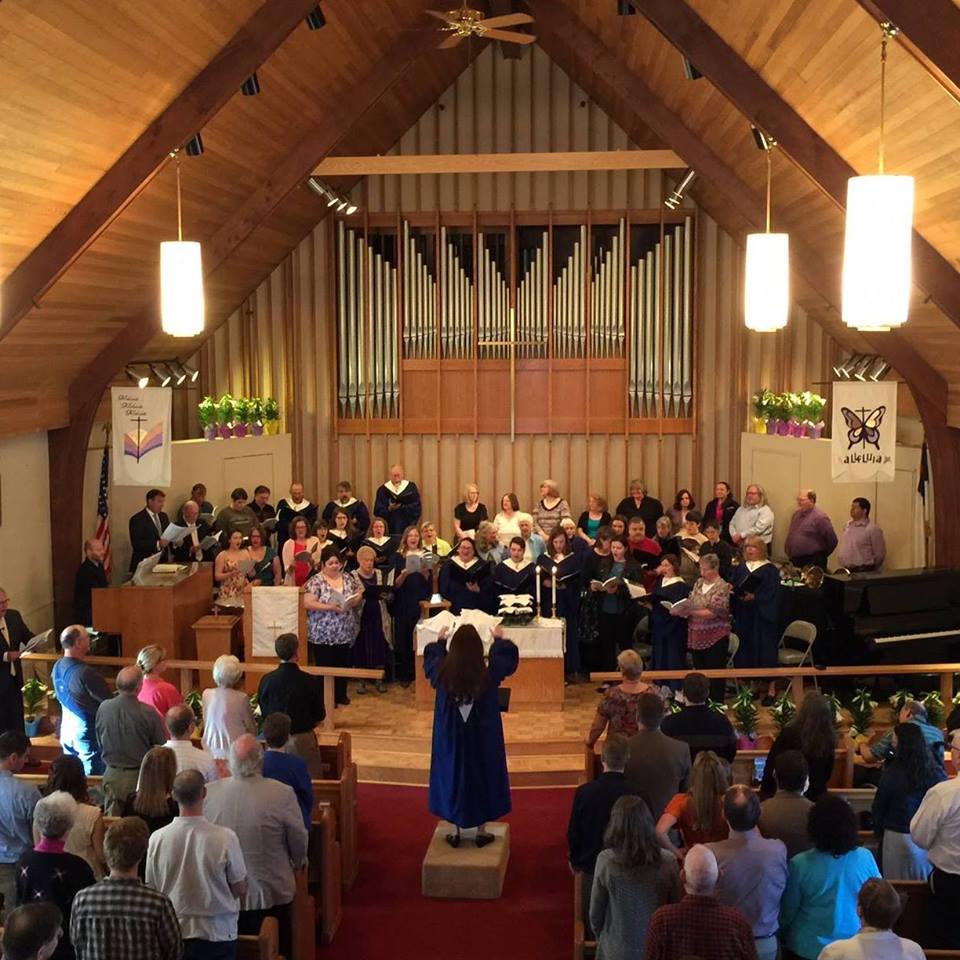
Worship at Fairbanks First UMC.
The Bread Line, a local ministry that addresses the needs of
the homeless throughout Fairbanks, started in the basement kitchen at FUMC but
eventually outgrew that location. Now, they operate from a separate building
and have expanded their ministry to include food service job training and
community gardening.
FUMC remains a missionary base of operations. Today’s UMVIM
teams work with the Fairbanks Rescue Mission each summer to construct a housing
community for chronically homeless adults. Members from the current
congregation have participated in missions as far away as Saipan, and as close
as fixing meals in the church kitchen for homeless families spending the night.
Born of missions, Fairbanks First remains an active and
vital outpost of United Methodist belief and service just south of the Arctic
Circle.
Submitted by Kelly Marciales (Executive Director, Valley Interfaith Action)
Two of the doors for Valley Interfaith Action
Valley Interfaith Action (VIA) has 12 “doors” in the Matanuska-Susitna Borough. We are Methodist, Lutheran, Episcopal and Catholic congregations who utilize a community organizing model to address the quality-of-life issues which affect residents in the Mat-Su. We were originally Valley Christian Conference, a collection of churches who birthed new nonprofit agencies to fill service gaps. Out of Valley Christian Conference sprung Valley Residential Services which provides low-income housing and Day Break which provides mental health services, among many other nonprofits over twenty years. In 2015, Valley Christian Conference relaunched under a new vision and mission of faith-based community organizing to develop and empower leaders to advocate on their own behalf. Since launching as VIA, the organization has developed six local organizing ministry teams from Palmer to Willow and held public meetings yielding notable improvements to the lives of Mat-Su residents.
VIA is currently working with Anchorage Faith and Action Congregations Together (AFACT) to establish an organization on the Kenai Peninsula which would broaden our connection of congregations who are engaged in this transformational outreach work. VIA leaders are excited for this expansion.
Currently Christ First UMC in Wasilla is working with VIA’s organizer, Gretchen Clayton, to establish VIA’s seventh local organizing ministry team. Gretchen has worked alongside Rev. Daniel Wilcox to do dozens of one-to-one visits with families, hear their concerns and hopes for the community, and engage the faith-based community organizing model based on their desire to build stronger relationships between one another and the between the church and their neighbors.
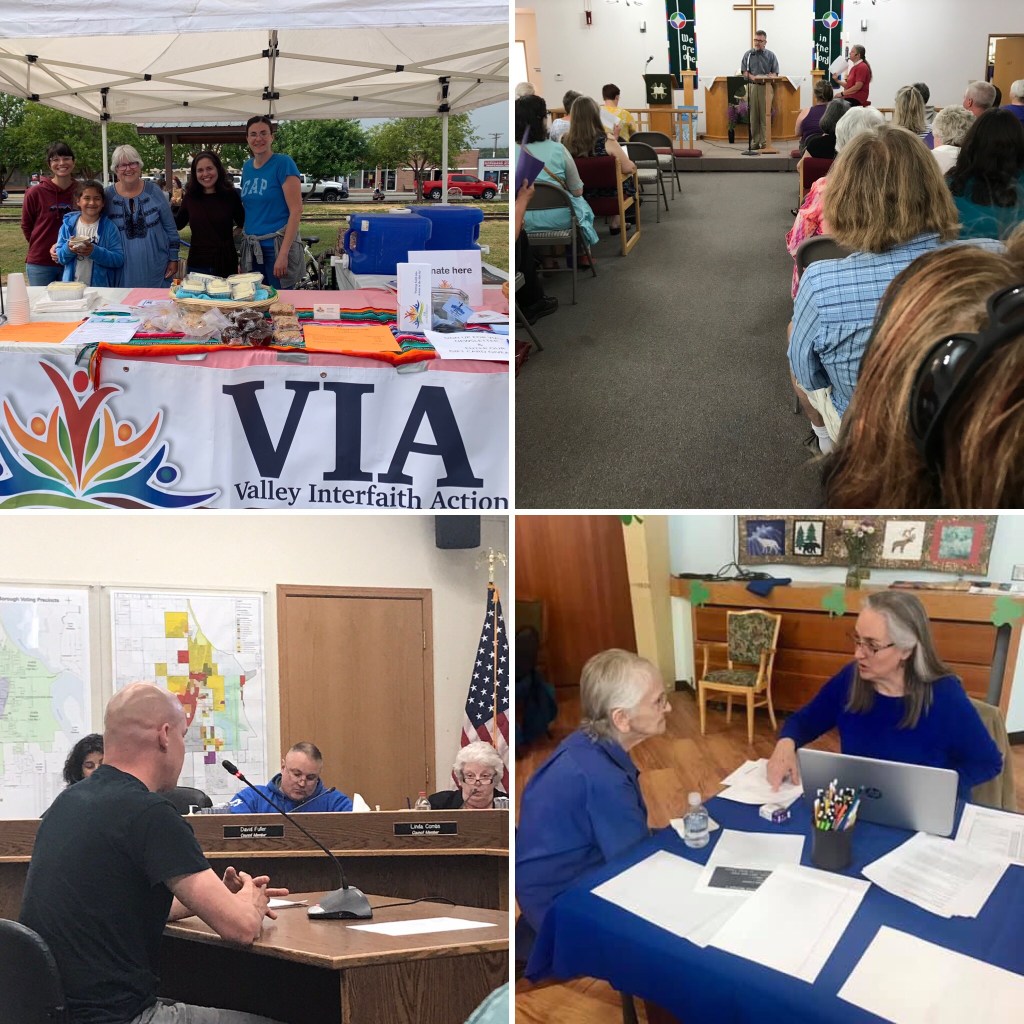
Clockwise from top-left: 1) Staff and leaders at Friday Fling 2). Pastor Joe- D from Willow UMC leading a faith reflection at a public meeting at Trinity Litheran Church on the budget vetoes. 3.) Caesar Marciales, pastor of Mesa Sagrada ELCA, testifies at Palmer City Council to support an ordinance 4.) Lisa Smayda of St. Michael’s works with a resident of the Palmer Pioneer Home to write a letter to their legislator







 Alaska United Methodist Conference